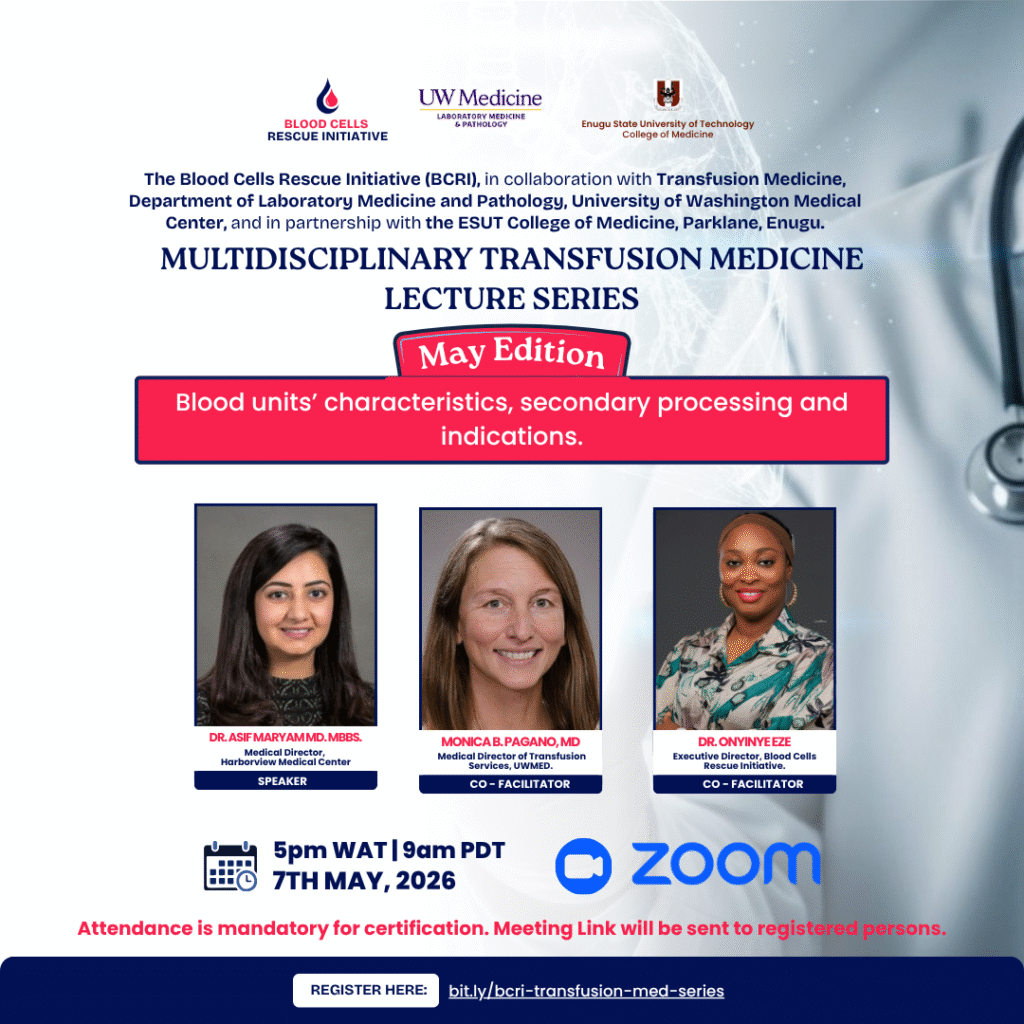
In this lecture, Dr. Maryam Asif provided a clear and practical overview of blood components, their collection, characteristics, storage requirements, and secondary processing. She explained the differences between whole blood donation and apheresis collection, highlighting how each method affected component production, donor exposure, workflow, and the availability of specific blood products.
The lecture described how whole blood was processed into components such as red blood cells, plasma, platelets, and cryoprecipitate, with attention to their clinical uses, storage temperatures, shelf lives, and indications for transfusion. Dr. Asif also discussed automated blood processing using the Reveos platform, emphasizing how automation improved standardization, throughput, traceability, and consistency in component manufacturing.
Dr. Asif further explored Low Titer Group O Whole Blood in trauma care, including the importance of anti-A and anti-B isohemagglutinin titers in reducing hemolysis risk. The session also covered key component modifications such as leukoreduction and irradiation, explaining their role in reducing transfusion complications and improving patient safety. Overall, the lecture strengthened participants’ understanding of safe, targeted, and effective blood component therapy.